

Entre las 16 especies de garrapatas en Virginia, solo unas pocas especies suelen picar a las personas.
¿Cómo identifico una garrapata?
Las garrapatas pueden identificar observando ciertos caracteres (como la forma de sus piezas bucales y su escuto) junto con los colores y los patrones.
Si empiezas a enfermar tras una picadura de garrapata, saber qué tipo de garrapata fue puede ayudarte a ti y a tu equipo sanitario a hablar sobre las pruebas y las opciones de tratamiento.
Puedes enviar tu garrapata a VDH para su identificación a través del programa de encuestas de garrapatas: Virginia Tick Survey
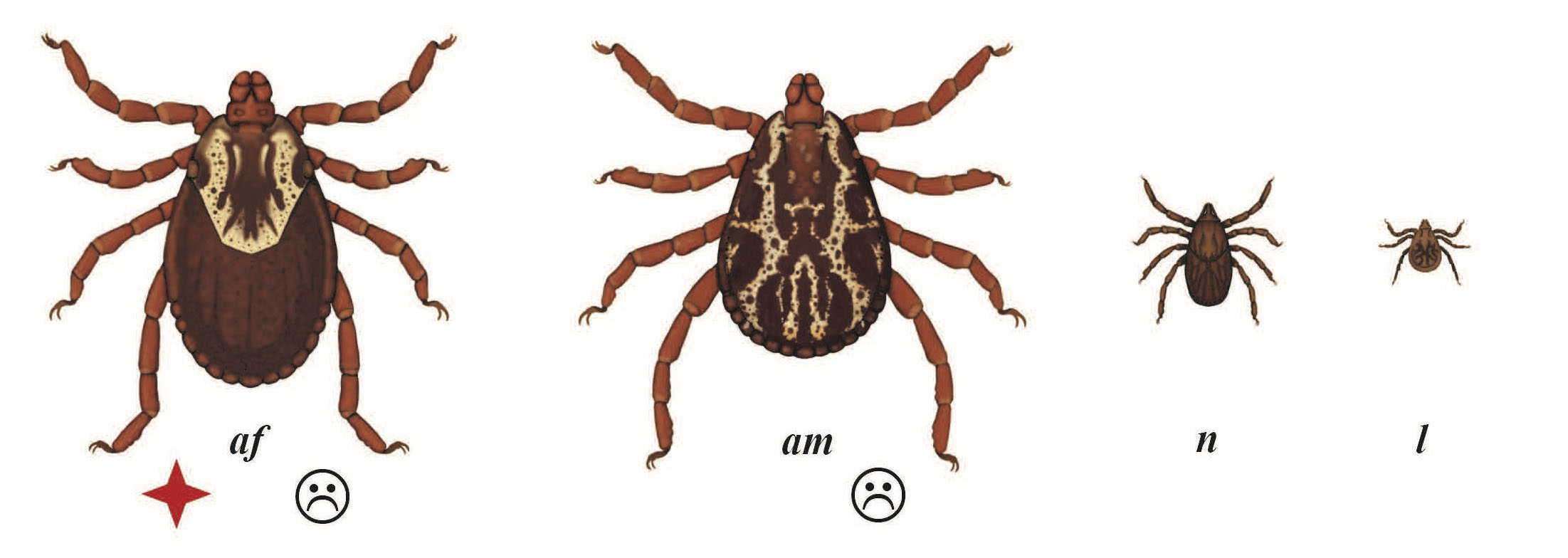
Garrapata americana del perro
La garrapata American Dog se encuentra por toda Virginia y puede transmitir fiebre maculosa de las Montañas Rocosas, que puede afectar tanto a humanos como a perros. Aunque son similares a la garrapata de la Costa del Golfo, pueden distinguir por sus piezas bucales cortas y redondeadas.
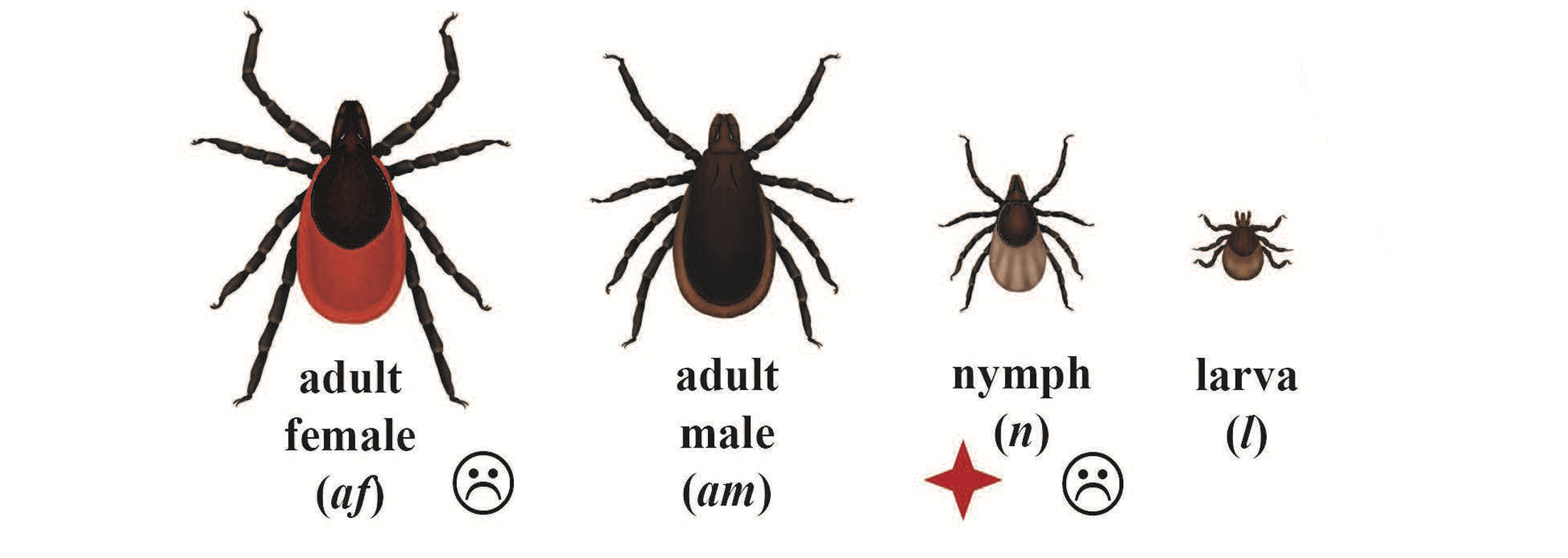
Garrapata de patas negras
La garrapata de patas negras, también llamada garrapata de ciervo, es una garrapata de gran importancia para la salud pública que transmite la enfermedad de Lyme en Virginia y el este de Estados Unidos. Las garrapatas macho son de color marrón oscuro o negro y se asemejan a una pequeña semilla de sandía. Las hembras son de color marrón rojizo detrás de su escudo negro que está justo detrás de la cabeza (en la espalda de la garrapata).
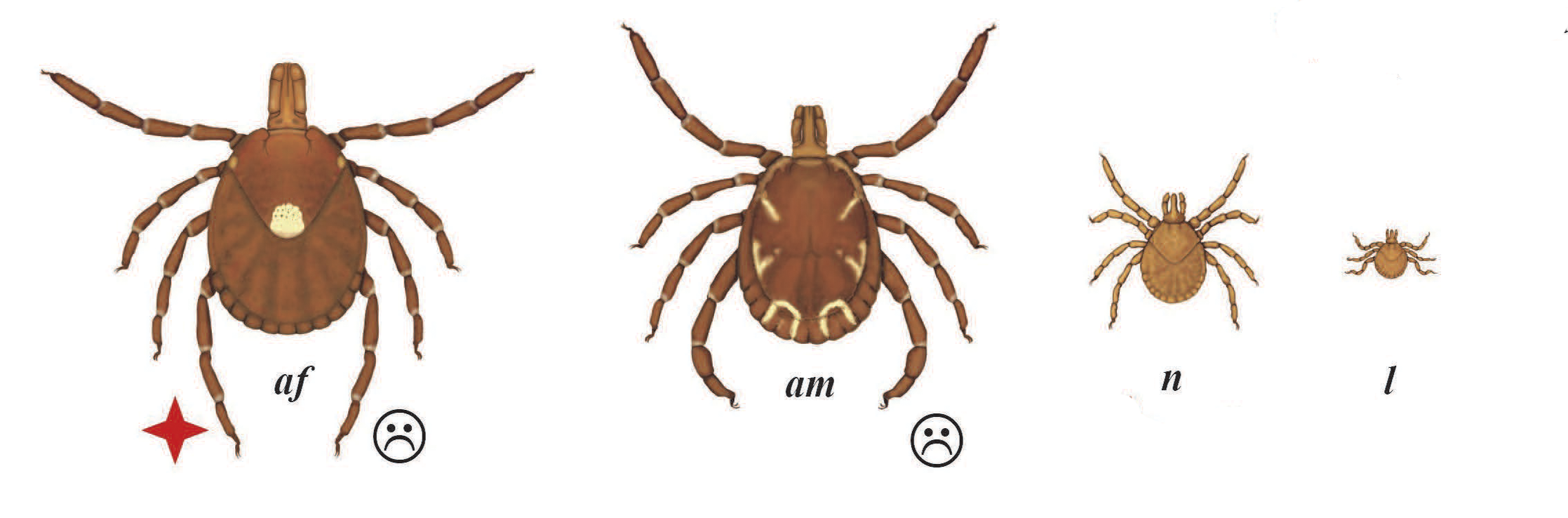
Garrapata de la estrella solitaria
La garrapata Lone Star se puede encontrar en toda Virginia, pero suele habitar en zonas por debajo de 1,600 pies de altitud. Esta garrapata es una picadora agresiva y tiene el potencial de transmitir enfermedades graves como la ehrlichiosis y la fiebre manchosa de las Montañas Rocosas, y puede causar el síndrome de Alfa-gal. La hembra adulta se reconoce mejor por un punto blanco, o "estrella solitaria", en el centro de su espalda.
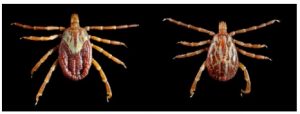
Garrapata de la Costa del Golfo
La garrapata de la Costa del Golfo se encuentra más comúnmente a lo largo de la costa de Virginia, y es un vector importante en la transmisión de Rickettsia parkeri, que es una de las rickettsiosis de fiebre manchosa. Aunque se parecen a las garrapatas American Dog, se distinguen por sus largas piezas bucales rectangulares.
Un vector conocido de Rickettsia parkeri , que es un tipo de rickettsiosis de fiebre maculosa también llamada fiebre occidental de marea.
Todavía queda mucho por aprender sobre las garrapatas, y puede que haya otros tipos de garrapatas que puedan picar a las personas.
Ocasionalmente, otros tipos de garrapatas pueden acabar mordiendo o mordiendo a las personas. El Departamento de Salud de Virginia está trabajando estrechamente con socios federales, estatales y académicos para comprender los riesgos para la salud pública asociados a estas otras garrapatas.